I Didn’t Know a House Could Be Moved
A lot of people say the same thing the first time they hear about what I do:
“I didn’t know a house could be moved.”
That reaction makes sense.
Most people have seen new construction. Most people have seen or heard of buildings being demolished, but many have never considered that an existing house might have another option besides demolition.
Sometimes, instead of being torn down, a house can be carefully relocated to a new property and given a second life.
That does not mean every house should be moved. And it does not mean every relocation is simple.
But it does mean this:
Demolition is not the only process to clear a property for a new housing project.
A Different Way to Think About an Old House
When people look at an older house, they often see one of two things.
- They either see a problem to remove.
- Or they see a structure with character, history, and reusable value.
I tend to see the second option.
Some houses still have strong bones. Some still have beautiful details. Some still have the size, shape, and presence that make them worth saving.
In some cases, relocating that house can be a creative alternative to building a brand-new structure.
Why Would Someone Move a House?
There are a few common reasons.
Sometimes a house is sitting on a property that is being redeveloped.
Sometimes a family wants to rebuild on a fire-affected lot and is open to placing a relocated home on the property instead of starting from scratch.
Sometimes a property owner wants to save a house with character rather than watch it disappear.
And sometimes an available or donated house is a rare opportunity to give both the structure and a future homeowner a new beginning.
Is Moving a House Easy?
No.
House relocation takes planning, coordination, permits, engineering, transportation logistics, and the right receiving site.
It also takes patience.
A house does not simply get picked up and dropped into place overnight. Well, actually, it does, but there is a lot of paperwork that needs to be completed before the building is physically relocated.
That is one reason guidance matters.
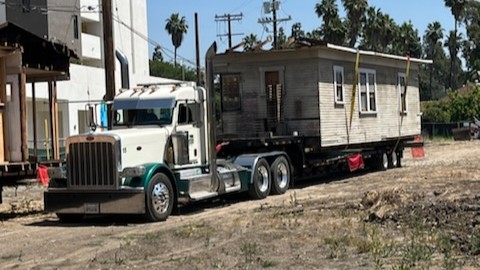
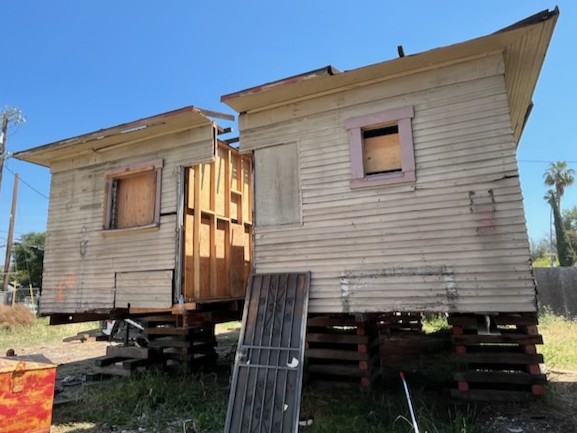
The house above was relocated in 3 sections. The roof was removed, and the house was cut in half so each half could fit on a flatbed.
Below, you can see where the building was split in half in preparation for loading onto the flatbed trailer for transport to its new home.
What My Role Looks Like
I help people move existing homes to new properties in Los Angeles County.
That includes helping clients think through questions like:
- Is this house worth relocating?
- Is this property a good fit for a relocated house?
- What approvals may be needed?
- What drawings need to be prepared?
- How do the Planning Department and Building & Safety fit into the process?
- What happens after the house arrives?
In simple terms, I help guide the process from idea to possibility.
Not Every House Can Be Saved, but Some Absolutely Can
House relocation is not right for every structure.
Some houses are too compromised. Some sites are not a good match. Some timelines are too tight. Some budgets are unrealistic.
But some houses are clearly worth another look.
And some families or property owners are looking for exactly this kind of solution without even knowing it exists yet.
A Second Life for a House
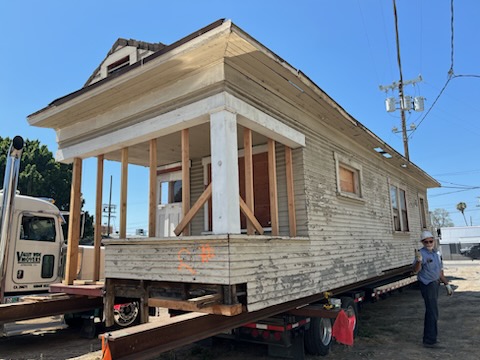
One of the things I love most about house relocation is that it changes the story.
A house that looked like it had reached the end of the road may actually be at the beginning of a new chapter.
A property owner may discover a creative alternative to new construction.
A family may gain a home with warmth, charm, and history.
And a structure that might have been demolished can be given new life in a new place.
Start With a Conversation
If you have a house that may be worth saving, or a property that may be the right fit for a relocated home, the best place to begin is with a conversation.
Because sometimes the first step is simply realizing:
Yes, a house really can be moved.
And sometimes that one idea changes everything.
Want a step-by-step house relocation overview? Visit the House Relocation Roadmap.